CDs, iPODS, MP3s: THE PHYSICAL MUSIC COMEBACK IS ABOUT MORE THAN NOSTALGIA

The re-emergence of physical formats goes beyond escapism and nostalgia, it’s a tectonic cultural shift that will shape the next generation of fandom.

Our CultureOS analyses 1.5bn data points every day, tracking the terms and values gaining attention in culture.

  • Cultural Attention around CDs increased 383% in the last six months.
  • Cultural Attention going to iPod Shuffles increased by 87% in 2025.
  • Vinyl sales rose 20% in the UK in 2025, its 10th consecutive year of growth.

According to the latest music industry data from Luminate, vinyl experienced another glorious year in 2025, marking almost two decades of consistent growth, with sales increasing by as much as 20% in the UK. Far from being novelty or nostalgia, the sale of records (or ‘vinyls’ if you want to annoy any Gen Xers) is now edging closer to being re-established as a mainstream category. Taylor Swift’s ‘Life of a Showgirl’ sold 1.6m albums in the US alone, a figure many mainstream artists would’ve been pleased with in 1986. 

Digital streaming still dominates market share, but the Cultural Attention at least seems to be channelling further into physical formats. iPod Shuffles are being fashioned into hairclips. Miu Miu made a walkman. A factory-sealed 2001 iPod sold for $29,000 online. Jil Sander opened a record shop in Tokyo.

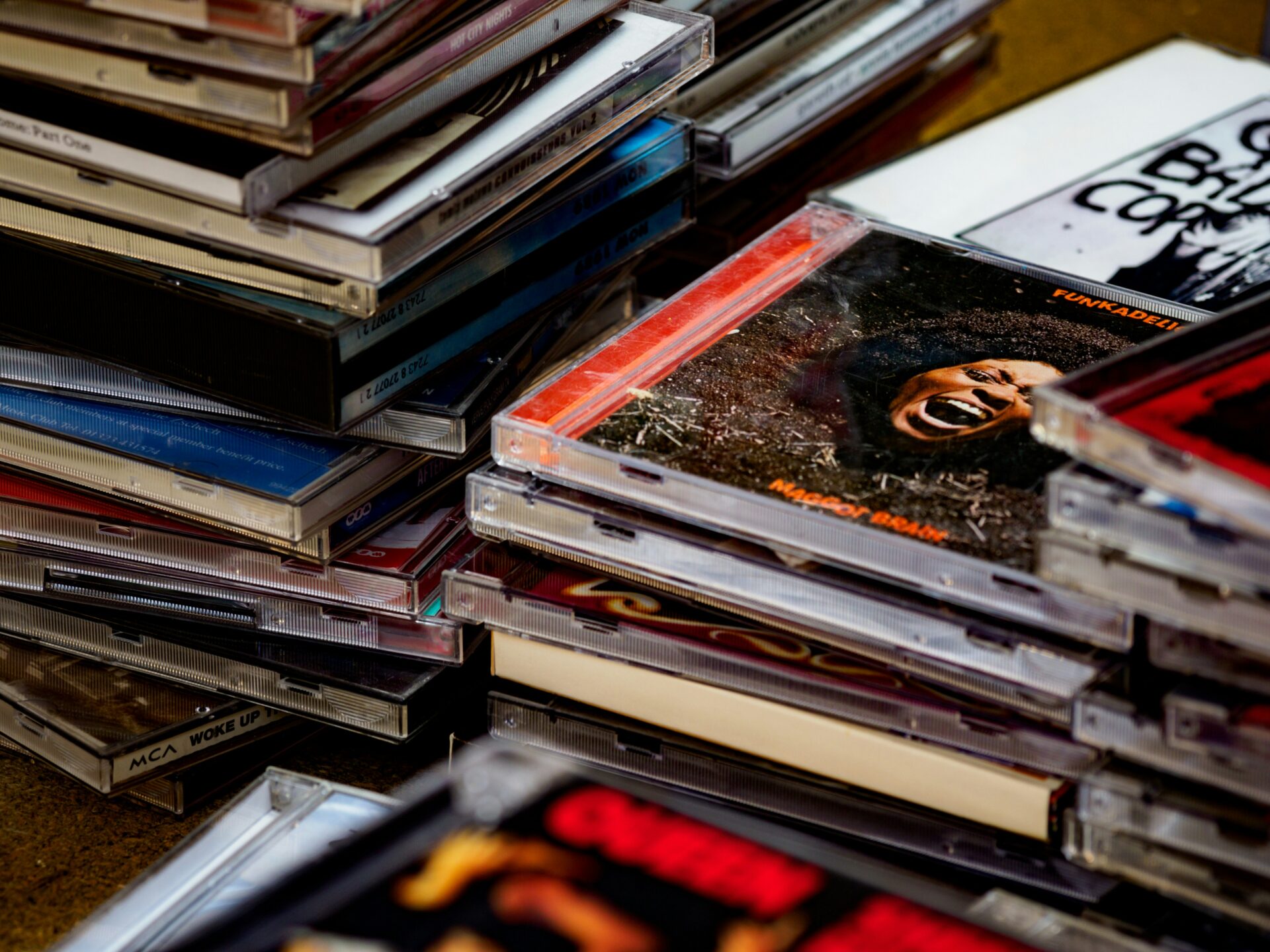
With the frenzy around tangible music, you might expect CDs to be next in line for a comeback. Indeed when CD sales, which had been falling every year since the mid ‘00s, plateaued in 2022, many in the music press took it as a sign of an imminent revival. The reality turned out to be more complex. 

Our CultureOS, which measures the amount of attention going to topics online, shows that interest in CDs has grown astronomically in the last six months, a 383% increase in Cultural Attention compared to the six months before. And more than half of Americans surveyed in a 2023 YouGov poll expressed willingness to pay for music on CD.

And yet, CD sales fell sharply in the first half of 2025 in the US, and experienced only modest growth in the UK last year compared to vinyl. 

The important caveat here however, is that industry sales figures generally only include new releases. If vinyl’s trajectory from the fringes back into mainstream culture is anything to go by, the rumblings begin in the second hand market, where lower prices and a wider pool allows for experimentation. 

As the world’s biggest seller in any product category in the history of eBay and Amazon Marketplace, MusicMagpie knows a thing or two about selling second hand music. CEO Steve Oliver founded the company in 2007 by selling used CDs from crates in his garage in Stockport, eventually being acquired by AO group for approximately £10m in 2024. While their recent focus has been on phones and tech devices, the jewelled cases are becoming an important part of the business once again. “Physical media is a growth area in our business, just as much as our tech,” Steve told us over a video call. “Used media is up overall, which also includes books, games and DVDs. CDs have seen double digit growth over the last few years”. 

He cites affordability and sustainability as important factors driving Gen Z’s interest. A second hand CD version of Radiohead’s OK Computer sells for around £4.99 on Music Magpie, whereas a new vinyl reissue costs £30, and an original vinyl copy will set you back an average of £260, according to Discogs. 

New releases have the same affordability gap. The aforementioned Taylor Swift album retailed at £39.99 on vinyl, whereas the CD cost £13.99, with the connection to a physical object ultimately the same. As Oliver describes: “There’s something magic about a CD. People enjoy the touching, feeling and sharing element of music. There’s something deeply emotional about that.” He could just as easily be talking about vinyl. 

What does this tell us about culture?

The appeal of physical formats right now can partly be explained by the trend cycle reaching the 2000s, the peak era of multi-format music consumption, where everything from CDs to iPods and minidiscs came into play at once. 

And then there’s the digital detox angle. It’s easy to read this as a generation taking back control of their own listening habits from streaming algorithms. Breaking free of screen addiction. Anecdotally, teachers have reported students bringing walkmans and Discmans into school to circumvent the phone bans.

These are both relevant points, but we think there’s a deeper shift happening.

Thriving subcultures are built around a few key pillars: shared values, rituals, symbols, icons, language and community. Where music is concerned, icons would be the artists and their music; the symbols are the physical products, the posters, the CDs, the t-shirts and record players; while a ritual could be going to a gig or hanging out at a record shop, the IRL spaces where language and values develop. These are the things that embed us in a community, giving us a place to belong. 

Digital streaming provides listeners with icons on tap, a proposition so alluring that it drew attention away from the symbols, rituals and communities that made music fandom a complete subculture. This, in our view, is the source of the nagging dissatisfaction with streaming. Despite its convenience and cost-effectiveness, it speaks to one pillar of fandom only, at the expense of all others. 

Read in this way, the resilience of physical music formats is less about nostalgia and escapism, and more about culture correcting itself after a period of distraction by these novel technologies. New products like Tiny Vinyl and the sold out Mixer Bag show that physical symbols aren’t a relic of the past, but as much a part of its future as streaming. 

We’re seeing a similar sentiment across culture. From books to photography, there’s a growing sense that we may have forgotten something important about identity building by foregoing physical archives in return for convenience. Steve sums it up perfectly: “The same way we all had posters on our wall of our favourite bands, you don’t put music in a drawer, you put it on display, to say this is who I am”. 

Thought starters for brands.

  • It’s time we stopped talking about physical formats only as a reaction to, or substitute for digital. The two co-exist within the cultural ecosystem.
  • Access and affordability allows room for experimentation, which is how new scenes develop and categories grow. How are you allowing for this in your area of culture?
  • Next time you see the classic “Gen Z craves authenticity and / or connection” in a deck, stop for a moment and think about what it actually means. Can you think of specific examples, and what they mean to your category? 

To unlock more insights, email discover@culturelab.co 

Sources: 

CultureLab OS data 2024-26

How The Phone Ban Saved High School, NY Mag, 2025 

Luminate End of Year Report, 2025

Led by Taylor Swift, U.S. Vinyl Sales Rose for 19th Consecutive Year in 2025, Variety, 2025

Understanding the American Market for CDs and Vinyl, YouGov, 2023