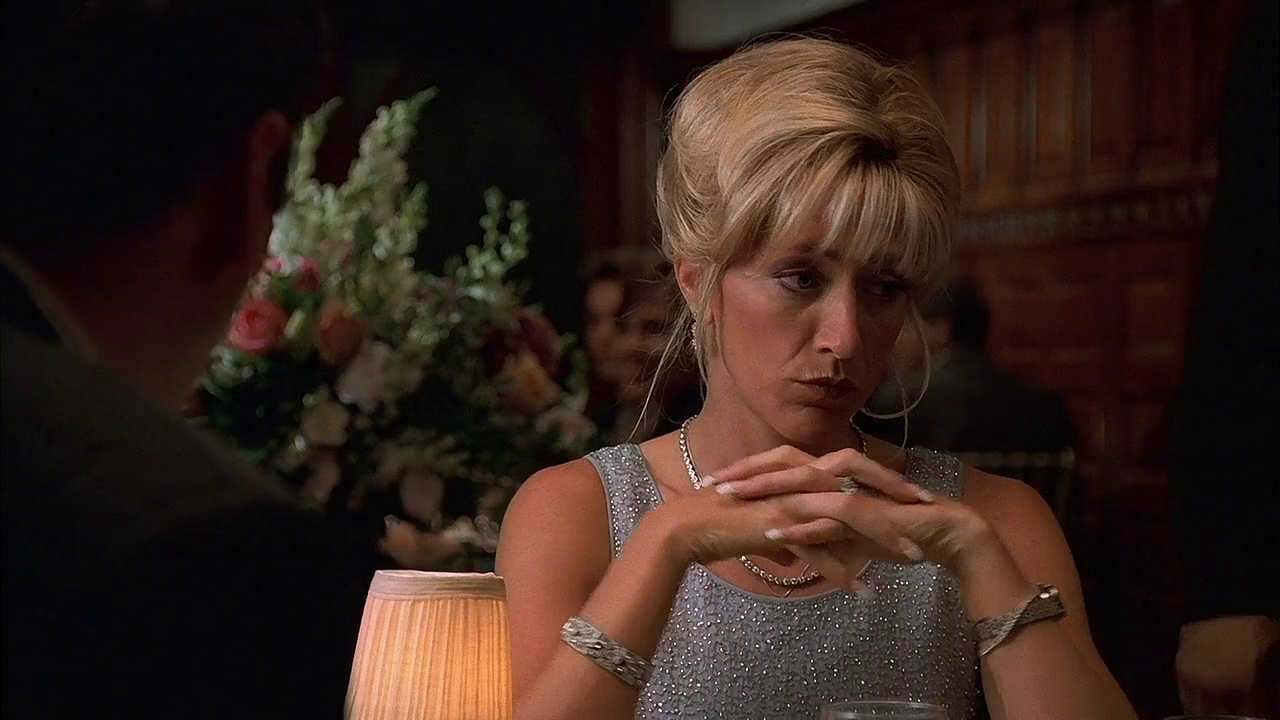
MOB WIFE AND THE ITALIAN-AMERICAN OBSESSION

Social media awash with Sopranos memes and red sauce joints popping up around the world. What is it about the portrayal of Italian Americans in culture that has Gen Z captivated?

“Clean girl is out. Mob wife is in”, famously declared Brooklyn-based TikToker Kayla Trivieri in the opening week of 2024. A mere few days and millions of views later, Minimalism was over, elbowed aside by the spirit of unapologetically bolshy, fur coat wearing Italian-American women like Carmela Soprano. The BBC, Vogue, even Francis Ford Coppola himself all had something to say about it. By the end of the month, searches for leopard print had rocketed by 213% on Depop. 

Read in isolation, Mob Wife could be seen as a simple pendulum swing away from the previous year’s austere looks like Clean Girl and Quiet Luxury – an arbitrary new ‘core’ to keep the algorithms busy for another month. But peeking deeper into culture reveals clues to this sudden mainstreaming of Italian-Americana. 

Opened in 2012, Carbone is the Greenwich Village red sauce spot named by Vanity Fair as “the most celebrity-studded restaurant on earth”, with a reservations list so exclusive The New Yorker published an insiders’ guide to securing a table. Inspired by the mid-century aesthetic of Italian restaurants that once blossomed all over New York City, Carbone’s success went on to inspire a new wave of glamorous red sauce joints in major cities around the world, where the gold jewellery shines and the decor is as indulgent as the truffle tagliatelle. In the UK, Big Mama Group’s ever-expanding collection of TikTok-trendy trattorias now includes Jacuzzi, Gloria, Carlotta and Ave Mario, where a neon-lit picture of Adriana from The Sopranos clutching a diamond bracelet hangs above the entrance to the bathrooms like an icon. 

And then there’s The Sopranos, cultural megalith and staple of the modern meme vernacular. The show’s cultural revival was already gathering pace underground thanks to Kith’s 2017 lookbook featuring Michael Imperioli and the popular Sopranos Out of Context meme account, making it primed for a mass (re)discovery during lockdown. By the time Mob Wife made it to TikTok, Gen Z and Millennials were already well versed in the dark humour of New Jersey’s favourite crime family. 

What does this tell us about culture 

Clearly tying the culture of an entire ethnic group to a criminal organisation romanticised by TV and film companies has been hugely problematic with real-world consequences for individuals over the years. It’d be remiss of us not to mention this. 

But accurate or not, the screenwriters’ tropes about tight community bonds, a strong sense of purpose, and the procurement and enjoyment of disposable income, speak directly to the needs of a generation left socially alienated and financially adrift. 

That way of life isn’t exclusively Italian American, of course. Similar Working Class communities around the world are built upon the same foundations (it’s why Jersey Shore translated so naturally to Geordie Shore). 

We believe it’s possible that the 20th Century de-industrialization of the UK and US not only tore a hole in the fabric of Working Class life, but also robbed future generations of the traditions and values which once eased the strain of financial precarity, leaving us to summon them like ancestral spirits through performative dressing and ritual – in this case big jewellery and even bigger plates of pasta. See Peaky Blinders for a similar subcultural phenomenon.

Brands playing in this space should keep in mind this wider social context. Burberry’s week-long takeover of Norman’s, a mock-greasy spoon cafe in London, was widely regarded as insensitive and brought to light the brand’s, and indeed the entire industry’s, difficult relationship with the Working Classes. A nuanced approach that includes those communities being celebrated is the key to success here.  

We see three simple but effective steps to avoiding mistakes or missteps when working with communities where it’s important to be considered and sensitive:

  • Invite those communities in: work with people from the community as part of the creative process; and ensure that you’re actually listening. If the insight feels generic to you, imagine how it’ll feel played back to the community?
  • Spotlight those communities: the next step up from listening, is partnership. Rather than hiring actors or giving a small voice to the community, give them a platform and bring them into the work itself. 
  • Finally, hire people from these communities: this is by far the most effective method to avoid misstapes: build a culturally diverse team. Simple to say, simple to do, you just have to act with intention. 

To unlock more insights, email discover@culturelab.co 

(Sources: CultureLab CultureIndex, February 2025)