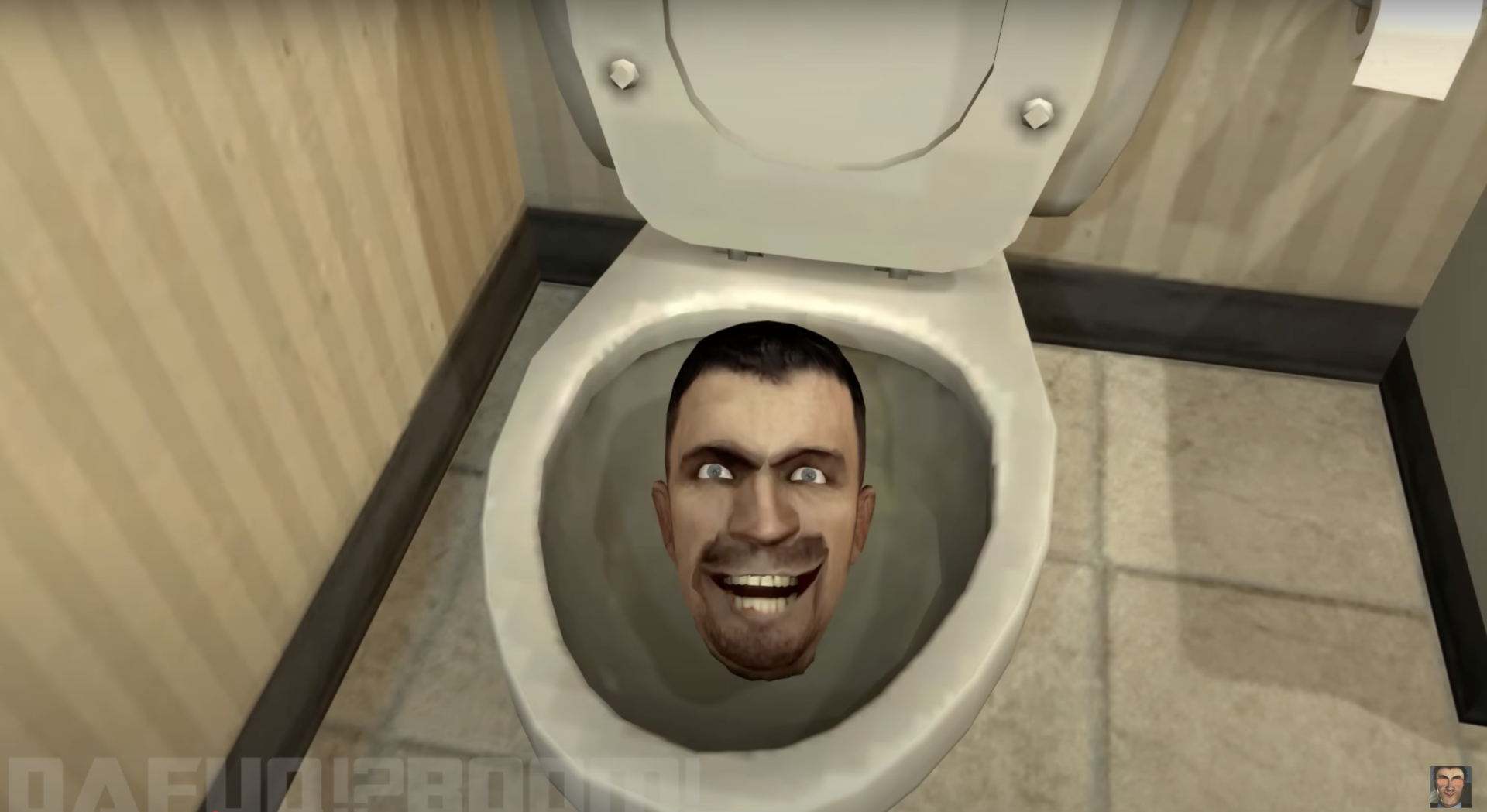
Skibidi Toilet

NUTTER BUTTER IS TAKING ON THE MID (AND WINNING)

The snack’s unhinged TikTok account has gone viral for its nightmarish posts. Is surrealism the way to escape the algorithm’s grip? Are we about to welcome a new wave of weirdness?

Our favourite examples of creativity right now have one thing in common: they’re weird

Take Nutter Butter’s recently viral TikTok account. The peanut-based snack has amassed 1.4m followers by creating a nightmarish, surreal meme-world that borders on Satanic. You might find a cookie dressed as the twins from The Shining, or sinister posts making reference to ‘Aidan’, a person of unexplained relevance. Others pose insane questions like “what could you if you don’t chair so they say no could couch?” 

And then there’s Skibidi Toilet, an animated series with over 45 million subscribers, most of them school age, about a group of ghoulish heads who live in a toilet. So disturbing are the characters created by Georgian Alexey Gerasimov that a classic moral panic has ensued, with pearl-clutching parents terrified for the purity of their children’s thoughts.

Weirdness is seeping into more established channels too. The BBC recently launched The Golden Cobra, an absurdist animated series about a curry house in the Welsh valleys with a death metal theme tune, whose creators were commissioned after their original shorts picked up a cult following on YouTube. 

Those of a certain age will be immediately reminded of the likes of Salad Fingers and RatherGood, cult favourites from the early ‘00s, where the nascent language and logic-defying humour of the internet began to take shape through its experimental pioneers. Some of that early magic was undoubtedly lost as the online world became swallowed into the mainstream, but we see it re-emerging through a new generation bored with the churn of bland content. 

What does this tell us about culture?

For a long time, social media companies proclaiming the sanctity of data in order to sell advertising successfully duped brands into thinking they could engineer creativity using only logic and metrics. But everybody using the same tools to achieve the same outcome means one thing: everything looks the same

By introducing algorithms trained to recognise and repeat content we’ve already seen, culture has found itself lost in an infinitely familiar beige swirl. ‘The mid’, as it’s been dubbed: TV, music, design, advertising that isn’t bad by any measure, but also doesn’t make us feel anything: a dull hum in the background of our lives barely reminding us we’re awake. 

How do you rebel against a culture measured only by efficiency, in which the ability to create has been reduced to a simple set of codes and prompts? You stop making sense. You introduce Satanism to your peanut butter cookie’s TikTok account. You create a series about a zombie head that lives in a toilet. The fact that it bends the rules of logic is precisely why it feels exciting.

The same could be said of many of history’s most forward thinking artists and musicians, from Picasso to Sun Ra. And at the dawn of AI, when questions are being asked about the future of art and those who make it, perhaps breaking the rules is the key to keeping creativity alive. 

Brand takeaways

  • Consistently inconsistent: Breaking the rules takes risk and commitment. Nutter Butter began their current strategy in early 2023. It took almost a year to begin cutting through, at which point many brands would’ve given up. Committing to the long term vision paid off. 
  • Keep an eye on the edges: weird (and funny, for that matter) is tricky to pull off, and one approach is to really understand where the edges of popular culture are, and spot the weird stuff to find where you can create something in a similar vein but different. This would be a good approach for a brand that’s early in its efforts to try to build cultural resonance. 
  • Find your audience’s funny bone: if you’re not quite ready for the edges, but still have that comedy itch to scratch, then research into the types of comedy and entertainment that your audience are into is a safer spot to start. This type of cultural analysis should enable you to find what tickles them outside of your category, and then create content with the best bits that most resonate with your brand – or better still commission original content from those areas of culture.

To unlock more insights, email discover@culturelab.co 

(Sources: CultureLab CultureIndex, February 2025)