LET THE GOOD TIMES ROLL: TRAIN TRAVEL’S SECOND GOLDEN ERA

Private trains are the latest super rich status symbol, with climate conscious Gen Z also climbing aboard the rail resurgence. 

In 2022 Thierry Gaugain, the world famous designer who made his name creating oversized yachts for the 1%, unveiled the world’s first private train, the G-Train. Described as ‘a palace on wheels’ its 14 luxury cars can host concerts, al fresco dinners, and VIP parties. 3,500sqm of technical glass allows the train to become transparent at the touch of a button, offering 360 views of wherever its owner chooses to travel, all for $350m. 

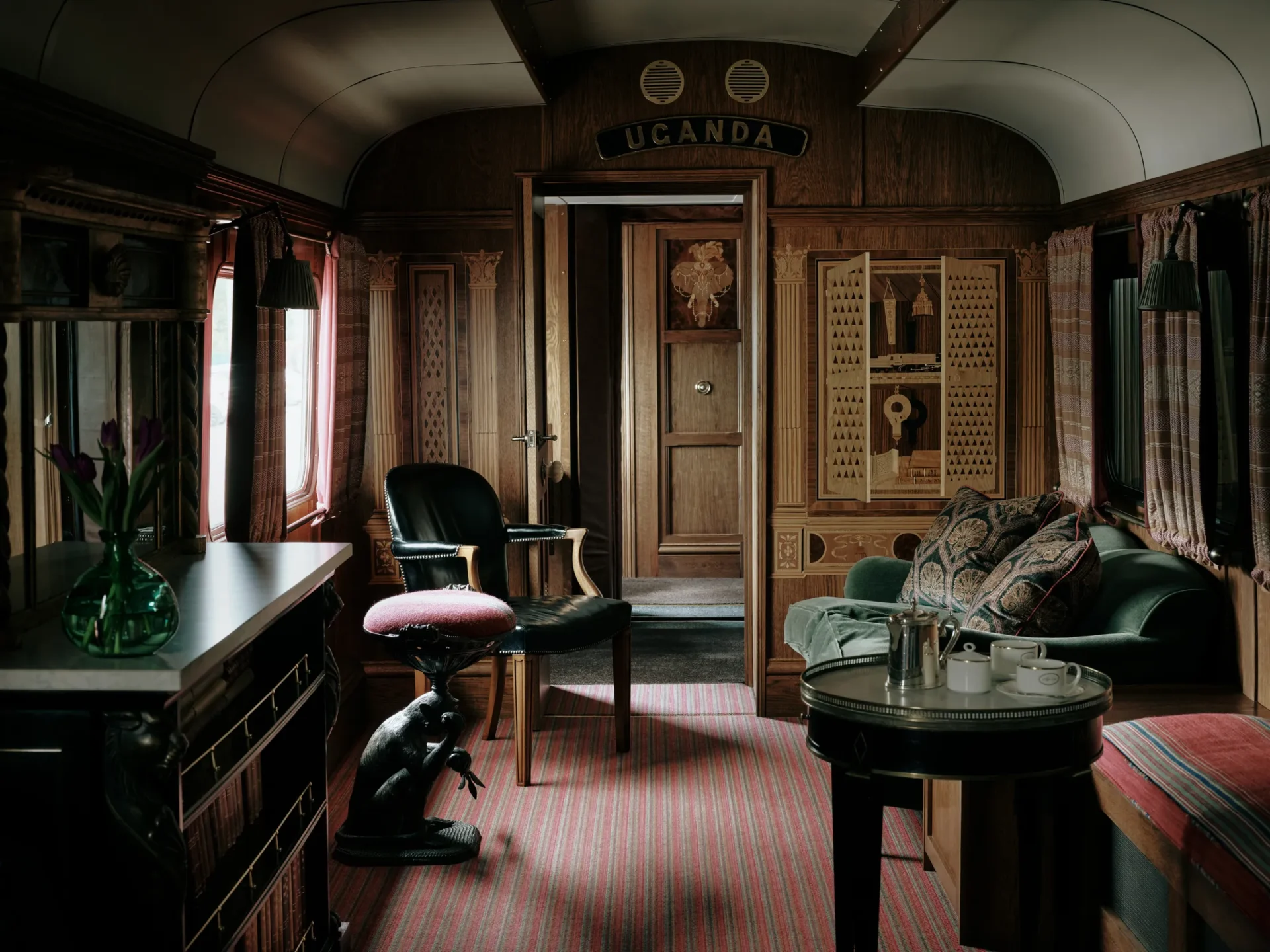
Gaugain hasn’t been the only one enjoying a little railway opulence lately. In 2024 Britain got its first private train owner when a multi-millionaire businessman meticulously restored a vintage Caledonian Sleeper to its former glory. The designer of The Chairman’s Set, as it’s known, told World of Interiors “there were no precedents”. Even the Royal Family doesn’t boast their own private train. 

And if you can’t afford a whole train to yourself, The Orient Express, owned by uber luxury hotel group Belmond, recently announced the opening of a new carriage. L’Observatoire Suite is an Art Deco dream, channelling the bygone golden era of train travel, complete with its own library and marble en suite bathroom. 

All this signals a return of the refined reputation rail travel once enjoyed, before the advent of private jets and superyachts. 

But it isn’t just billionaires climbing aboard. With planes and automobiles falling foul of the climate movement, trains are finding a new generation of young eco-conscious fans too. Research found that 39% of Gen Zs are taking the train more often, with environmental concerns the main motivator. This is reflected in Network Rail’s recent sustainability-focused messaging, which points out that switching from car to rail for one journey saves enough carbon to power a phone for eight years. And who could forget the cult Gucci x The North Face campaign featuring Britain’s most zealous trainspotting model Francis Bourgeois? 

What does this tell us about culture?

When we talk about change beginning on the fringes of culture, it’s understandable for our minds to go straight towards avant-garde creative communities, but the super rich represent something of an influential niche themselves. 

Consider how Succession, a show about a dysfunctional family of billionaires, spawned the Quiet Luxury trend. The fact that the characters were fundamentally terrible people didn’t stop us wanting to dress like them. It’s interesting to note that despite modern society’s apparent aversion to obscene wealth, we still keep a keen eye on how the other half live.

There’s also links to the Slow movement here. Train travel is seen by many as an ethical antidote to polluting alternatives, but as we’ve seen with Slow Food and fashion, that can come with higher costs, reinforcing the climate movement’s association with privilege. 

Thought starters for brands

  • It’s ecologically sound, dahhhhling. The traditional portrait of the ecologically conscious was that of sandal-wearing, vegan, hippies with an aversion to wealth and capitalism. However, alongside trends such as #UnderConsumptionCore and a broader move away from conspicuous consumption, it’s becoming increasingly aspirational to be considerate (or at least seen to be) of the climate catastrophe. How can your brand make it aspirational to act now on the climate crisis?
  • Culture has more than one edge. Artist and musician Andrew Weatherall famously said that “if you’re not standing on the edge, you’re taking up too much space”, and while that’s certainly true in our world, we often pick a very specific edge – working class youth – for looking at what’s next in culture. But culture has many edges, and one of the most fascinating and innovative in recent years has been the ultra-elite, with a combination of financial aspiration and cultural signalling, ensuring more and more people from less means, look to the wealthy for the new cues of culture. Could you brand introduce a product or service that’s purely aimed at the uber elite, to drive interest in your more accessible products?

To unlock more insights, email discover@culturelab.co 

(Sources: CultureLab CultureIndex, January 2025)