WE ARE FAMILY: INTERGENERATIONAL CLUBBING

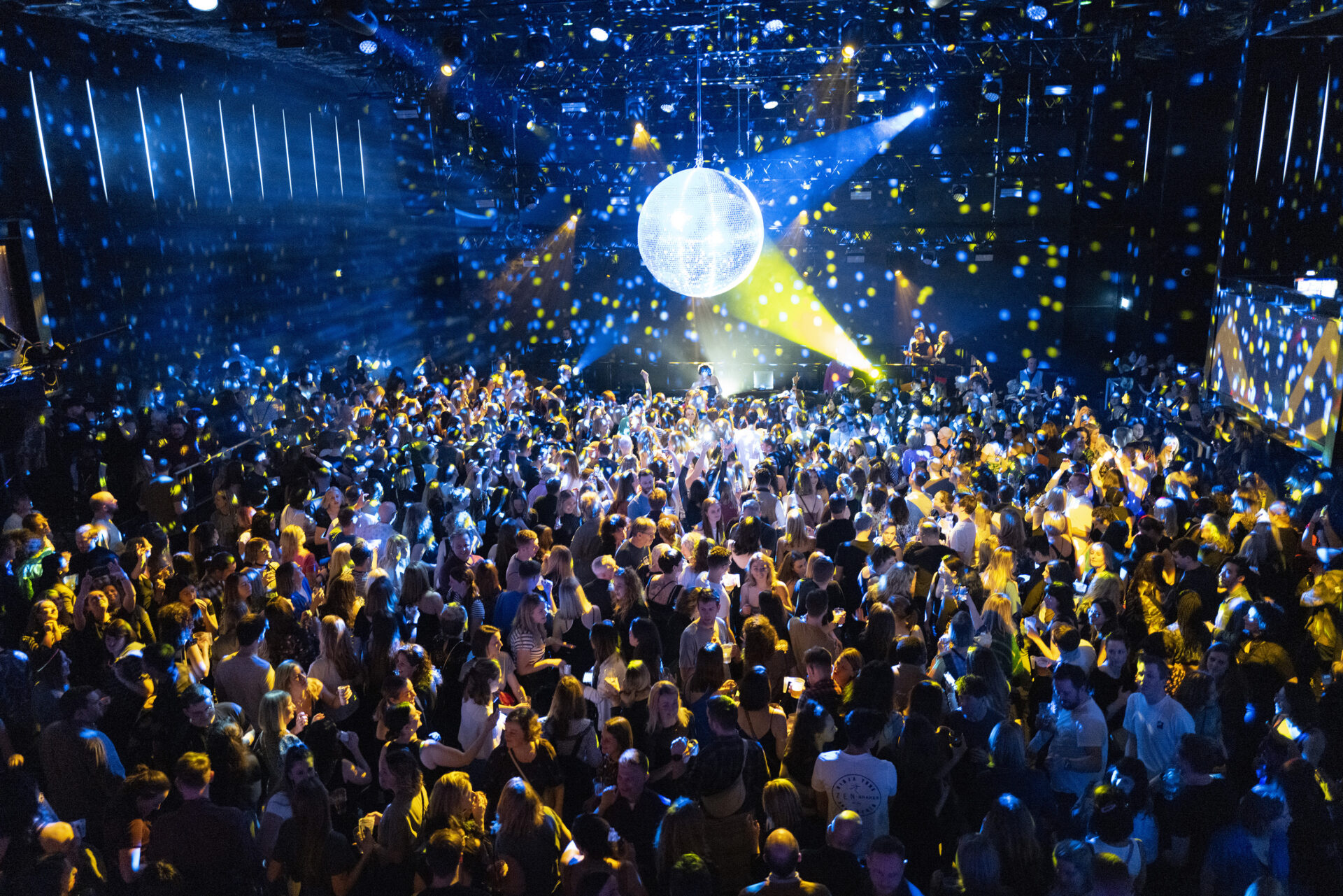
Once regarded as a folly of youth, club culture has evolved to include a wide range of age groups in recent years, challenging preconceptions about who belongs on a dancefloor.

We use the term ‘club culture’ as shorthand for a tradition which began in small DJ-led clubs and private parties in 1970s New York, and grew to become the global industry we all recognise, with its own musical lineage, language and signals. A subculture in its own right. Today, club culture can encompass festivals, street parties and other events not necessarily happening in a ‘club’, but which are clearly a part of the same continuum.

For most of its lifespan, club culture was geared heavily towards the 21-30 age bracket. Younger teens were excluded by alcohol licensing laws, and society deemed that anybody older should have more pressing concerns than dancing, like paying bills and raising children.

But something switched in recent years. It’s now common to find parties where parents and toddlers dance to DJs with grandchildren of their own. In the UK, cutting-edge South London crew Touching Bass provided buggy parking at Carnival this summer. Meanwhile, intergenerational party Raver Tots host UK-wide events for parents and babies, where seminal underground DJs like Nicky Blackmarket and DJ Hype appear alongside new talent, encouraging attendees to ‘Throw Shapes Not Toys’. 

And in the US, we’re also seeing House music block parties for children gaining popularity in club culture strongholds like Chicago and New York.

At the other end of the spectrum, DJs who cut their teeth in decades gone by are pulling crowds of empty nesters back into the rave. Faith, seminal party and magazine revered by young House fans, is going stronger than ever, run by a group of DJs now in their 60s. Online radio station Crackers, so named after the pioneering ‘70s London club, now throw Sunday afternoon reunions where original members, decked out in designer labels, dance with newcomers half their age. 

At a time of social division, these events can offer a rare opportunity for people of different generations to meet face-to-face and celebrate their commonalities. Tropes about pensioners being fusty and out-of-touch quickly crumble in the face of a packed dancefloor of 60-something ravers singing together, arms in the air. 

This evolution is partly a result of club culture itself maturing, but there’s also been a wider cultural shift away from hedonism in recent years, which means clubbing is now easier to fold into any stage of life. A party doesn’t necessarily mean staying out until 4am and recovering for two days. Events are planned with broader lifestyles in mind.

What does this tell us about culture?

If subculture is fundamentally about becoming part of something bigger than yourself, then ritual celebrations are where that abstract feeling becomes reality. This is why clubs, parties, raves and festivals hold such an important place in the hearts of those involved.  

This could also be the key to club culture’s unwavering resilience. 

Operating in a hostile environment since day one, it has continued to adapt to repeated, often compounding existential threats: homophobia and racism from authorities, mass gentrification, licensing crackdowns, radical changes to the way we socialise and the industry’s sudden total shutdown during the Covid pandemic. 

We believe these challenges, and the much publicised contraction of the night time economy, has motivated clubbing devotees to not only keep their traditions alive, but actively pass them onto future generations, re-energising older people who might ordinarily have moved on from the scene, and recruiting new members from an even younger age. 

As one proud Dad explains on a BBC feature about Raver Tots: “It teaches them our way of life, what we went through and what we grew up with…To me it’s like a religion.” 

Thought starters for brands

  • Bridging the gap: through a combination of the second summer of love generation reach their 50s, many of their children are reaching their 20s, and much of music currently in a cycle of nostalgia for the 1990s – and we’re witnessing a rare moment of intergenerational synchronicity where parents are connecting on a deeper cultural level with their children, and passing on the values, rituals, and symbols that shaped their own paths into adulthood. How can your brand tap into this moment through references that work for both generations?
  • Third spaces: over the last decade, festivals and dancefloors have become more open and distinctly less ageist, they’ve also become less focused on alcohol, and many clubs have become multi-use spaces to keep the tills ringing. As such, nightclubs and venues are increasingly becoming third spaces that play a positive role in promoting shared values, storytelling and uniting communities. How can your brand support these spaces? 

To unlock more entertainment insights, email discover@culturelab.co 

(Sources: CultureLab CultureIndex, November 2024)