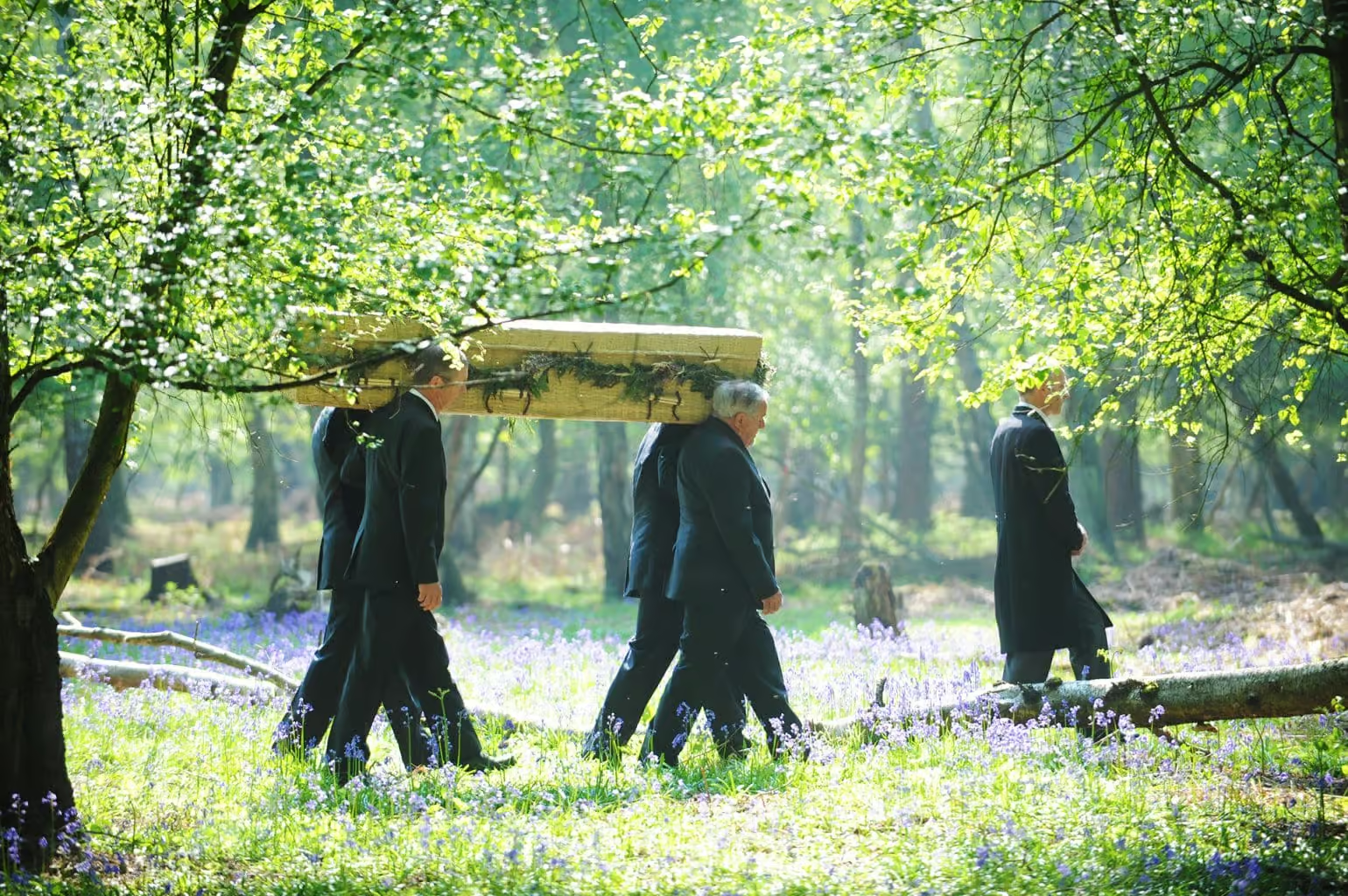
ECO-FUNERALS ARE CHANGING HOW WE THINK ABOUT DEATH

From flatpack coffins to water cremations, for a growing number of people the question of what happens when we die is a matter of practicality over faith.

We’re encouraged to think about the full life cycle of our clothes and appliances, but have you ever considered the environmental impact of your own body once you’re finished with it? You’d be forgiven for saying no. Despite being the only true certainty in life and something every person ever born has in common, we struggle with death in the West. 

Even as we become an environmentally conscious society, we still put more thought into disposing of our Christmas trees responsibly than ourselves. 

But that could be about to change. In recent years, the funeral industry has reported a growing interest in eco-friendly options and non-traditional services, showing the staid traditions we associate with death are broadening. A 2023 survey by the National Funeral Directors Association in the US showed that 60% of respondents expressed interest in exploring green funeral options, an increase of 5% in two years. 

Reducing the carbon footprint of a funeral can be done in a variety of ways: coffins now come flat packed and / or made from biodegradable materials like cardboard or willow, which can be reused and recycled. Water cremation, which uses five times less energy than fire, is now offered by the UK’s biggest funeral provider. 

Climate friendly options tend to be lower cost too – because if you thought the cost of living was bad, dying won’t give you much respite either. According to a 2024 report by Sun Life Insurance, the overall price of a send-off in the UK is at a record £9658, up 5% from the previous year.

Alongside eco-friendly funerals we’re seeing non-traditional services become prevalent in culture too, where guests are requested to wear bright clothing or have a party with a DJ, reflecting shifting attitudes towards the end of life. 

What does this tell us about culture? 

Across society we’re seeing changes to the way we commemorate life’s milestones, with people confident to bend tradition to their own taste. The rules of marriage, birth, families and relationships are up for discussion in a way that would’ve seemed eccentric or even heretical only a few decades ago. 

Funerals have arguably been the last of these institutions to shift, owing to the fact that their planning tends to be done by older people, but it’s possible that the Covid-19 pandemic has forced us all to confront mortality like never before. 

Three key takeaways

  • If previously taboo subjects like death are becoming part of the climate conversation, it’s essential that brands are proactive in this space too. 
  • Investing in repair / reuse / recycle initiatives is a great way to show that you’ve considered the full life cycle of a product. 
  • Work with creatives who can elevate this process. Collaborate with artists who use recycled materials or creators who customise vintage clothes, for example.

To unlock more identity insights, email discover@culturelab.co 

(Sources: CultureLab CultureIndex, September 2024)