THE REVOLUTION WILL BE TENDERIZED: THE SLOW FOOD MOVEMENT

How a protest against a fast food chain opening in Rome 40 years ago sparked a slow revolution that still influences the way we eat, farm and live today. 

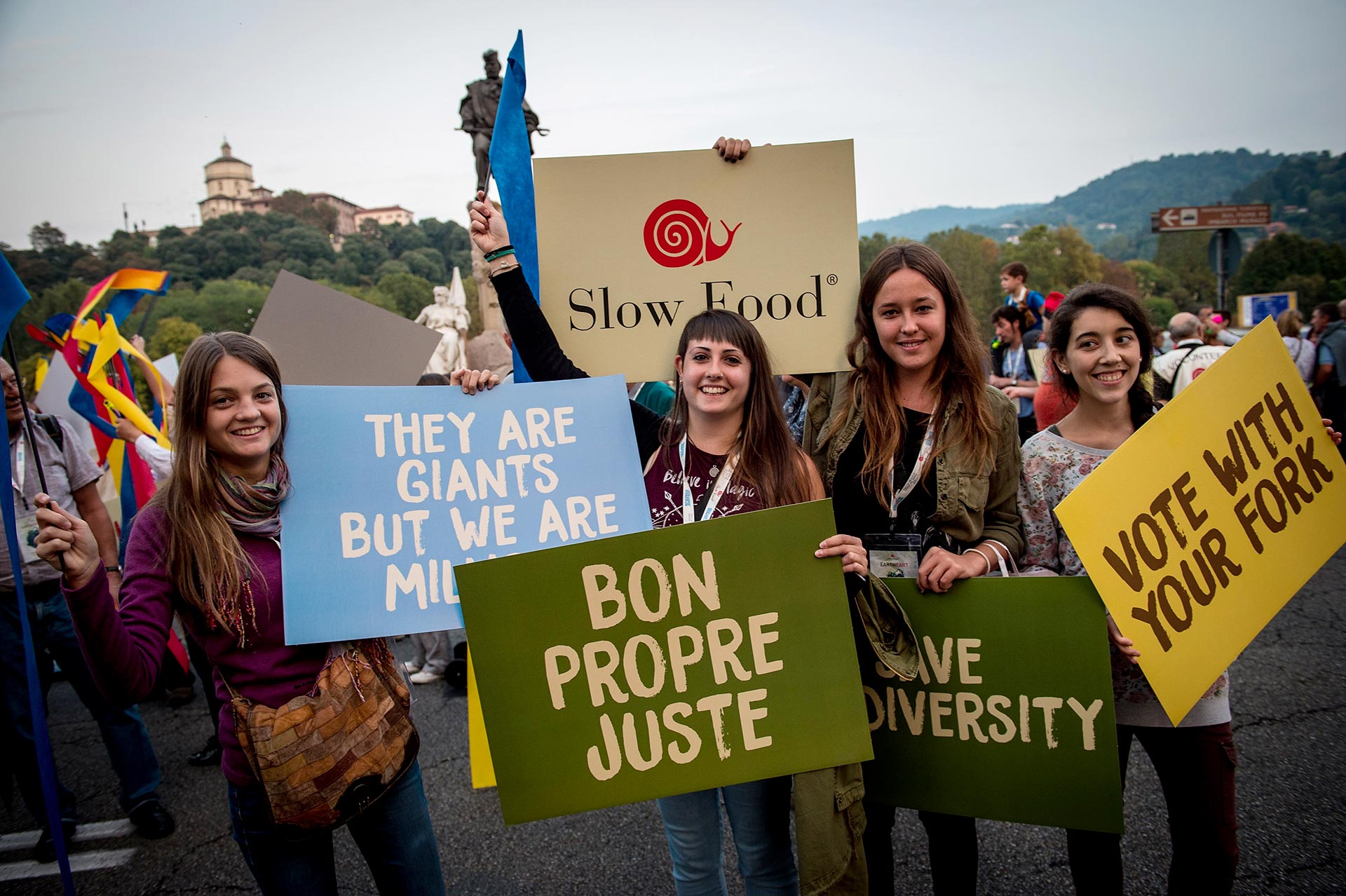
April 20th, 1986. Thousands of irate Italian gastrophiles gather in a city square in Rome waving placards with slogans like “WE WANT SLOW FOOD”. They are protesting the opening of Italy’s first fast food restaurant, and the existential threat it poses to the nation’s agricultural industry and beloved way of life.

This is the birth of the Slow Food movement, an organisation that encourages cooking with local organic ingredients to protect the planet’s biodiversity, while promoting the value of a measured and patient approach. Quality over quantity.

From that initial protest in Rome 40 years ago, the Slow Food movement has grown to become a global grassroots network of restaurateurs, farmers and craftspeople, and they’re gaining more attention in recent years than ever before. They’ve even inspired similar groups to decelerate other industries: everything from travel to gardening to floristry now has its own version practising the ‘quality over quantity’ ethos, all grouped under the ‘Slow Living’ umbrella. 

Although the idea had been around for decades, Slow Food remained a relative niche until a 21st century triumvirate of a climate emergency, global pandemic and an economic crash prompted widespread reflection on our pace of life and the lifecycle of the things we consume.  The recent farm-to-table restaurant boom is another example of this in action. 

Follow the trail even further and you come to ‘do-nothing farming’, a Zen-like philosophy pioneered in the late 20th century by Japanese agricultural minimalist Masanobu Fukuoka. 

If we want to enjoy an abundance of nutritious food, Fukuoka’s idea was for humans to stop tampering in nature completely and work only within the ecosystem’s natural cycles. According to Fukuoka, weeding and ploughing are all destructive and unnecessary tasks that only create more work in the long run, which is time we could be spending socialising or being creative. Simply upholding the natural balance of nature with a light touch leads to better produce, more time and a happier life. 

Farming aside, what we’re seeing here is a focus on mindful consumption, a conscious step back from the Capitalist demand for convenience and efficiency at any cost. As a global culture, we not only know that exponential industrial growth is unsustainable, we’re beginning to feel the effects too, in the weather, our health and recent supply chain crises. 

Experiences that allow us to slow down, savouring small moments of joy in a busy life, help us to feel human again, rather than merely consumers and producers. Food is an excellent vehicle for this, especially when bringing people together to share in those moments, but the same idea can be found in any area of life. 

So how can brands take part in the slow revolution? 

  • Understand that genuine human connection and interdependence are more important than ever. The dizzying pace of AI innovation, along with the world’s rapid journey towards automation, has left us craving opportunities to embrace our humanness. 
  • Brands can demonstrate key aspects of the Slow Living ethos through their own culture, whether a gentler approach to commercialism or a greater emphasis on craft, timelessness of products, and their own heritage and history.
  • The Slow movement is all about celebrating talented and passionate craftspeople, who are often the unsung heroes of the supply chain. Whatever the industry, brands can platform these people and share their stories, providing them with the resources and infrastructure to excel. 

To unlock more food and drink insights, email discover@culturelab.co 

(Sources: CultureLab CultureIndex, August 2024)