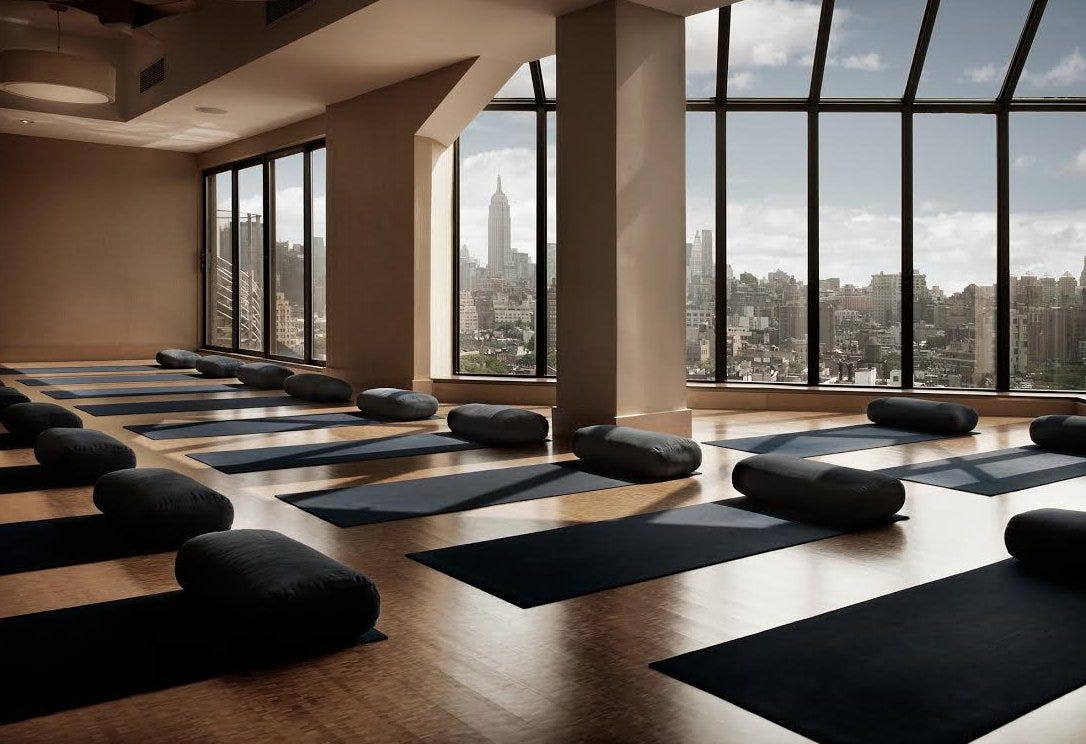
HEALTH IS WEALTH: THE LUXURY WELLNESS BOOM

From designer kettlebells to members club gyms, the rich are finding new ways to flex their status. 

As far as brand names go, they don’t come any more blunt than Sporty & Rich, the cult clothing brand founded by Canadian Emily Oberg in 2015. 

You’re most likely to spot Oberg’s ‘90s inspired t-shirts and sweats – emblazoned with words like ‘WELLNESS’ or instructions to drink plenty of water – on the tree-lined streets of uber-expensive neighbourhoods across the world, from the West Village to Malibu, to Marylebone. Their motifs have become a subtle status symbol for young urban professionals channelling a zeitgeisty mix of clean living and even cleaner aesthetics. The vibe is ‘Princess Di on the way to the gym’, as Oberg puts it. 

So while much of northern hemisphere is experiencing a cost of living crisis, those that are ‘beyond money’ are finding new ways to flash the cash and demonstrate that IYKYK, and they know. But couture and on-court wear aren’t the only beneficiaries of this luxury wellness boom. To those who can afford it, the designer sports equipment market is growing rapidly too. In June, French fashion house Celine released a pilates collection featuring a full size reformer machine with monogrammed leather panelling, and a set of weights. You can even get a Saint Lauren x Wilson tennis racket, a Louis Vuitton skipping rope, or a LOEWE yoga mat. 

It makes perfect sense for luxury brands to move into the sports and leisure space. If Hollywood has taught us anything it’s that rich people spend their days working out and drinking oversized health beverages. So why not turn gym equipment into a status symbol? If Celine can do it with a dog bowl, they can do it with a kettlebell. 

But the true upper sets understand that luxury isn’t just something you own as much as a way of life. High performance, high net worth individuals expect gold service as standard in every aspect of their lives, including at the gym. 

Setting up shop in some of the most expensive real estate in the world, from Kensington to Beverly Hills, Equinox combines the exclusivity of members clubs with high end gym facillities accessible only to the world’s wealthiest. The website lists a myriad of experiences from eucalyptus steam rooms to saltwater pools, stopping just short of offering a valet to mop your brow (although we’re sure it could be arranged).  

Equinox and Third Space aren’t the only ones in the game either. Even boxing gyms – more familiar on back alleys and industrial estates – now have a luxury offering in BXR, a slick, polished training experience with locations on London’s ultra-exclusive Chiltern Street and Canary Wharf, in the heart of the financial district. 

Brands looking to flex in this space must:

  • Understand which of their customers have, and which have not. This luxury wellness trend has a high price of entry – the Celine Pilates Reformer is nearly $20,000 – and during a cost of living crisis brands must tread a steady line in how they show up with their more ‘aspirational’ and entry level customers.
  • This is an opportunity to become embedded within the fabric of your customers lives beyond the fabric of their clothes, and by demonstrating how your brand understands their daily health and wellness needs, brands can create a much deeper, and broader, relationship with elite customers. 
  • However, this doesn’t necessarily mean launching new lines, divisions, or entire organisations – with many high-end brands in the wellness space already, there are ample opportunities to create collaborative platforms that bring the best of both worlds together. Think Hermes and Apple, or On Cloud and LOEWE, but with added pranayama. 

To unlock more luxury insights, email discover@culturelab.co 

(Sources: CultureLab CultureIndex, August 2024)