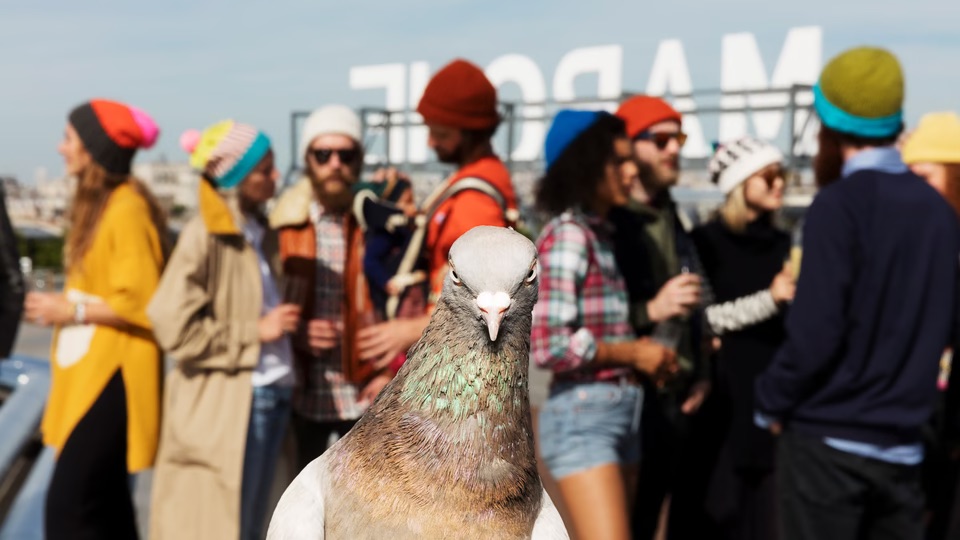
THE REINVENTION OF THE POOR PARIAH PIGEON

What a dishevelled pigeon in a pub garden can teach us about Gen Z’s relationship to nature.

If ever a bird needed a rebrand, it’s the pigeon. The embodiment of urban filth through the ages, unwelcome in the cities they call home. “Rats with wings”. Pariahs of the skies. 

Enter Hannah Hall. 

In the Spring of 2022 Hannah was enjoying a drink with friends outside her local pub in Nottingham, England, when a dishevelled looking pigeon landed on the bench and hopped onto her lap, refusing to leave her side all night. The landlady of the pub explained that the bird had been manhandled by some unruly customers, and was clearly in need of some TLC. 

Overwhelmed by sympathy, Hannah took the bird home and turned to TikTok for advice on how to care for its injuries. Although she didn’t know at the time, Hannah was about to become the main character in #PigeonTok, a global community of young people rewriting the pigeon’s place in popular culture. 22 million views later, Penny the Pigeon was on the mend, with a newly minted animal welfare charity set up in her name. 

Young pigeon fanciers (that’s the name given to those who keep the birds recreationally as pets, rather than for racing or talent shows – yes talent shows) are on the rise globally. From New Yorkers adopting the urban scraggly feathered variety en masse, to rural societies welcoming record numbers of eager young pigeoneers; in our CultureIndex platform, we’ve seen a six fold rise in pigeon fancying, and it shows all the beginnings of becoming a fully-fledged subculture within Nature. 

At first glance, this trend could be viewed as part of the widespread return to nature seen after COVID-19 lockdowns (as with Flock Together – see our coverage back in April), but closer inspection reveals something more profound. The love shown for these once maligned animals represents an active nurturing of the natural world. It’s Gen-Z stepping into their self-appointed role of protector, rather than passive participant or ignorant saboteur. It’s only apt that a creature so unfairly mistreated by previous generations should become the focus of their attention. 

So what’s the wider meaning for brands?

  • This movement is built upon a genuine love for the natural world, rather than a clout-chasing stunt or a fleeting social media trend. Understanding that is key for any brand looking to participate in conversations around the planet and its inhabitants. There are values and belief systems behind these trends that put them beyond cultural ephemera.
  • Brands who can demonstrate the same bold and unfettered concern for nature with their actions will resonate – and in doing so, automatically avoid accusations of greenwashing. It’s one thing to tell people you love pigeons, or the oceans, or trees – how are you showing them? Marketers; ensure you turn up with deeds, not just words. 
  • Emergent subcultures like pigeon fancying are often growing at a high velocity – and that growth often outstrips the communities ability to establish ‘infrastructure’ – hubs, places,  media, networks – that helps to provide a space for people to connect with each other. These physical and virtual spaces are fundamental to building strong communities and helping them to continue to grow. The right brands can play an active and important role here, by helping to establish platforms for emerging subcultures.  

To unlock more nature insights, email discover@culturelab.co 

(Sources: CultureLab CultureIndex, June 2024)