HARD ART: BRINGING THE EDGE BACK TO THE EASEL

He reinvented Bowie, created the ambient music genre, and has had a significant influence on many areas of culture over the last half century; but can Brian Eno save the planet?

In the early 1960s – while at art school – Brian Eno coined the phrase ‘scenius’. Decades later, he explained that it was a shorthand way to push back against the idea of the ‘lone genius’ archetype so prevalent in art and culture. Eno believed that all great work came from groups of people involved in a subculture or community – that genius came from the scene, not the silo. 

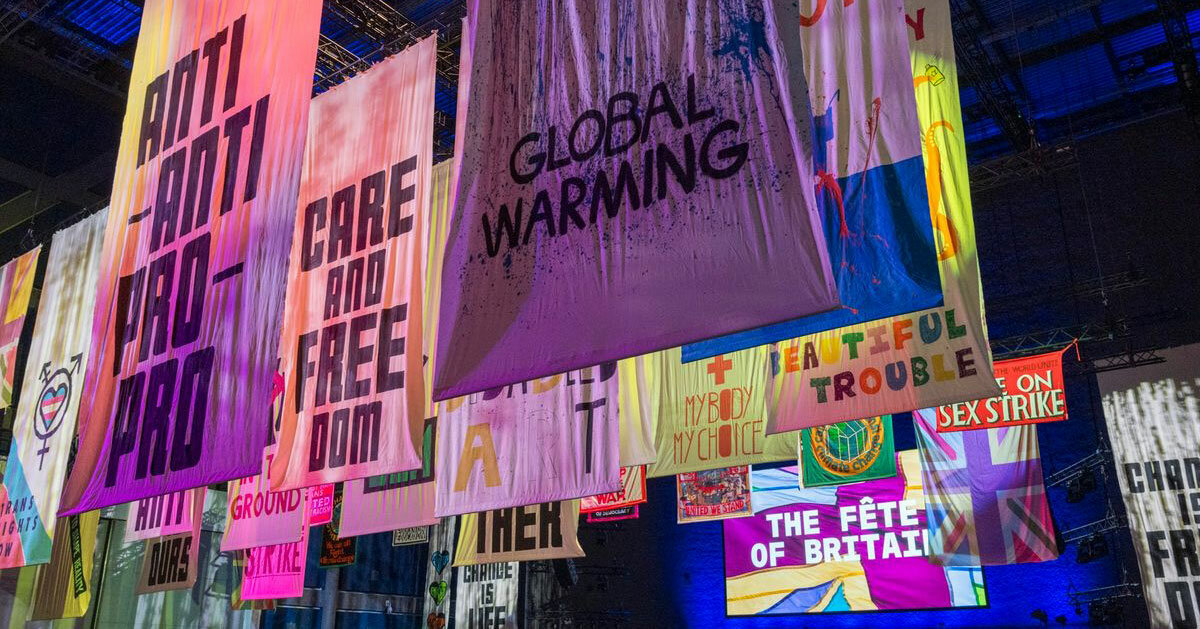
Since then Eno has proven this theory through his work time and time again, and earlier this year, his latest ‘scene’ emerged; Hard Art. What began as a series of informal meetings between leaders from different disciplines, became a more formalised collective in February this year at The Fete Of Britain, a four day mixed-media exhibition dedicated to exploring the intersection of crises and culture. 

Hard Art is a collective of artists, activists, scientists, and community leaders such as Es Devlin, Jon Ronson, Liz Slade, Jeremy Deller, Asif Kapadia, Olivia Douglas (and many more) that is dedicated to creating ideas and art that drive change and conversations about climate and democratic collapse. 

In Eno’s words, “[we share a core ideal] that the world can be better than this; that we shouldn’t accept the mediocrity of the status quo; and that creativity and art can open up space for a new and better world.”

Art is getting its edge back.

This is a very early look at an emergent community of creatives and cultural leaders, but given their individual achievements, it feels like a safe bet that as a collective their influence on popular and mainstream culture will be significant. 

Art has been proven to have a significant neurological impact; both promoting the release of dopamine (the pleasure hormone), and activating the amygdala (the part of the brain responsible for emotion and motivation) – could art focused on driving positive democratic and climate change have an outsized impact?

Hard Art is a very, very early stage community, but given the sizable influence we’d expect it to have across art, culture, and creative communities there are implications that we can extrapolate that apply more broadly to working with art and cultural movements more generally:

  • As nascent movements evolve, they begin to solidify and coalesce around a set of values, rituals, symbols, and language – understanding the likely trajectory and influence of a group will involve paying close attention to how the community develops through the art and work it releases – and help reduce any perceived risks of a partnership with that group.
  • The best art and ideas transcend borders and established reputations – and often the work that connects on a universal level travels at incredible velocity and far beyond the artistic cognoscenti (think: Yayoi Kusama, Banksy etc). So demonstrate that your brand sees the value in art as being the message, not the megastar behind it, and support grassroots initiatives and fund early-stage collectives.
  • If a nascent art movement shows signs of aligning with your values as a brand, then this represents a huge – and timely – opportunity. Provide a platform for the artists and creatives in that community, who will carry a message through their work that has meaning and impact for both parties – giving the art a bigger platform, the message greater cut-through, and making art accessible beyond the artistic bubble

To unlock more cultural insights, email discover@culturelab.co

(Source: Your Brain on Art: How the Arts Transform Us, by Ivy Ross and Susan Magsamen)